Testing, Testing, 123
04/08/2022James D. Wright, 1947-2019
01/05/2019
It is with great sadness that I reflect on the death of my old friend and mentor, James D. Wright, one of the most important and influential sociologists of the last half century. I am doubly disturbed because I didn’t realize how bad Jim’s health had deteriorated, and I missed an opportunity to see him again. Below is a reflection based on my nomination of Jim to the SSS Roll of Honor (which was unjustly denied). Jim was a good friend and a strong supporter throughout my career. He published my first article in Social Science Research in 1990, and put me on the editorial board when I was an assistant professor at Vanderbilt. He was always selfless, and helped his students and junior professors with all that he could muster. And, he was fun. I’ll never forget the 50th anniversary of Tulane Sociology party, which was a crawfish boil on Tulane’s immaculate campus. All of the fixin’s. Jumbalaya, crawfish, beer….I went over to Jim and told him this was the best party ever, and he said “what could have made it better?” And I said, “maybe if there was weed”, at which point he pulled out a joint and sparked it up. I love you, Jim. I’ll never forget you.
The volume and quality of Professor James D. Wright’s scholarly output is daunting, including 21 books and edited volumes, and 187 peer reviewed articles and book chapters—many of which have been reprinted. Current Google Scholar citations indicate that his work has been cited 8665 times, and 46 of his books and articles have been cited over 46 times. Professor Wright served as editor of Social Science Research, one of the most influential journals in the field, from 1978-2015. Additionally, Wright has served on the editorial boards of many journals, and was also the general editor of the monumental Encyclopedia of the Social and Behavioral Sciences.
James D. Wright received his PhD at the University of Wisconsin in 1973, and took a position at the University of Massachusetts that year. He quickly rose through the ranks to attain the rank of full professor in 1979. In 1988, he was enticed to move to Tulane University where he was the Charles A and Leo M. Favrot professor of Human Relations. In 2001, Professor Wright left Tulane to become the Provost Distinguished Research Professor at the University of Central Florida, and in 2013 was awarded the Pegasus Professorship. Wright has also servied as the director off the Institute for Social and Behavioral Sciences and director of the Survey Research Laboratory at UCF since 2003.
Jim Wright’s arrival at Tulane in 1988 revived the connection between that historic department and the Southern Sociological Society. He strongly encouraged faculty members and students to participate in SSS, and he was a fixture on the program and in the leadership of the organization. Wright’s connection to the SSS became even more visible after his move to UCF—which is arguably one of the most active departments in the SSS. Wright and his colleagues frequently bring more than a dozen students to the meetings, most of them with funding from Wright’s center. Wright has also served as members of the SSS program committee and as chair of the Honors Committee. In addition, Wright hosted a 50th anniversary reception for Tulane’s sociology department at the 2000 annual meetings of the SSS in New Orleans, where we were all treated to a genuine Louisiana Cajun crawfish boil on the grounds of Tulane.
James D. Wright’s contributions to scholarship are myriad, however, one ongoing thread connecting his work is the importance of community, how social groups seek to create and sustain community, and factors that can destroy it. Along with this focus on the importance of community, Wright’s work has amplified the importance of social class, focusing on the conditions of the working class and of the most disadvantaged.
Many of Wright’s contributions focus on the intersections between class, community, and psychological well-being, and these enduring contributions changed the way sociologists thought about class, community, and cognition. Wright was among the first to problematize the relationship between social class and support for conservative politics, and particularly for war. While theories of working class authoritarianism argued that alienation and disconnection from social institutions and media would spur conservative politics, Wright’s work suggested that the connection between integration and conservative politics works in the reverse. Along those same lines, in his classic book with Richard Hamilton State of the Masses, where Hamilton and Wright systematically address the mood and goals of the working classes, and show them to be rather content and unchanging, rather than alienated and angst-ridden. Wright’s companion book The Dissent of the Governed: Alienation and Democracy in America examined the distribution of alienation and its relationship to political disruption, and showed that not only are the working classes less alienated, the alienated are less politically organized. Hence, alienation is unlikely to spur disruptive politics because “Alienation+inactivity=nothing” (1976:253). While Wright’s work was often dismissed by activists hoping for a revolution, his assessment has withstood over 40 years of history.
Professor Wright’s contributions to the study of the working class often focused on issues of family and gender. His classic American Sociological Review articles on childrearing values provided an important empirical test of Melvin Kohn’s thesis on class and conformity and the importance of childrearing for the reproduction of social class, and particularly the working class. Wright also published several studies of family functioning and psychological well-being, some of which focus on the importance of labor force participation for women’s happiness. Again, while the findings (particularly his 1979 Journal of Marriage and the Family) did not fit the popular wisdom in sociology, his conclusions remain sound over decades of research.
In my mind, Professor Wright’s most enduring contributions were in the study of community, poverty, and homelessness. Much of this work focused on the simple demographics of counting the homeless—which is not so simple. Politicized claims about the magnitude and trajectory of the problem of homelessness finally met a sober empirical assessment in Wright’s numerous works with Peter Rossi and several other colleagues. I know that Wright was most proud of his 1987 paper in Science on estimating the size and composition of the homeless population. It meant a lot to him that sociological research on a difficult and important topic was published in the pages of the leading scientific journal. Wright’s many books and articles on the problem of homelessness examined both the genesis of the problem, and also potential solutions—particularly focusing on the importance of low-income housing. There was much academic controversy about the magnitude of the homelessness problem and the relationship between mental health and homelessness in the late 1980s when Wright put forth a torrent of research. Wright’s antagonists moved on to study other things as homelessness became less fashionable in sociology and in the public discourse. Yet, to this very day Jim Wright continues to study the plight of the urban poor and the problem of housing and homelessness, and he has made many contributions to academic and concrete public policy on these issues.
It is impossible to adequately convey the breadth and depth of Professor Wright’s scholarship, and my overview only touches on the contributions I am most familiar with. I leave it to my distinguished colleagues to provide some insight into his influence on scholarship on violence and crime, poverty and health, the long term impact of natural disasters, and the cultural production of sport in NASCAR. What is clear from Professor James D. Wright’s scholarly career is that his contributions have been numerous, multifold, and enduring.
Richard L Simpson, 1929-2017
01/03/2018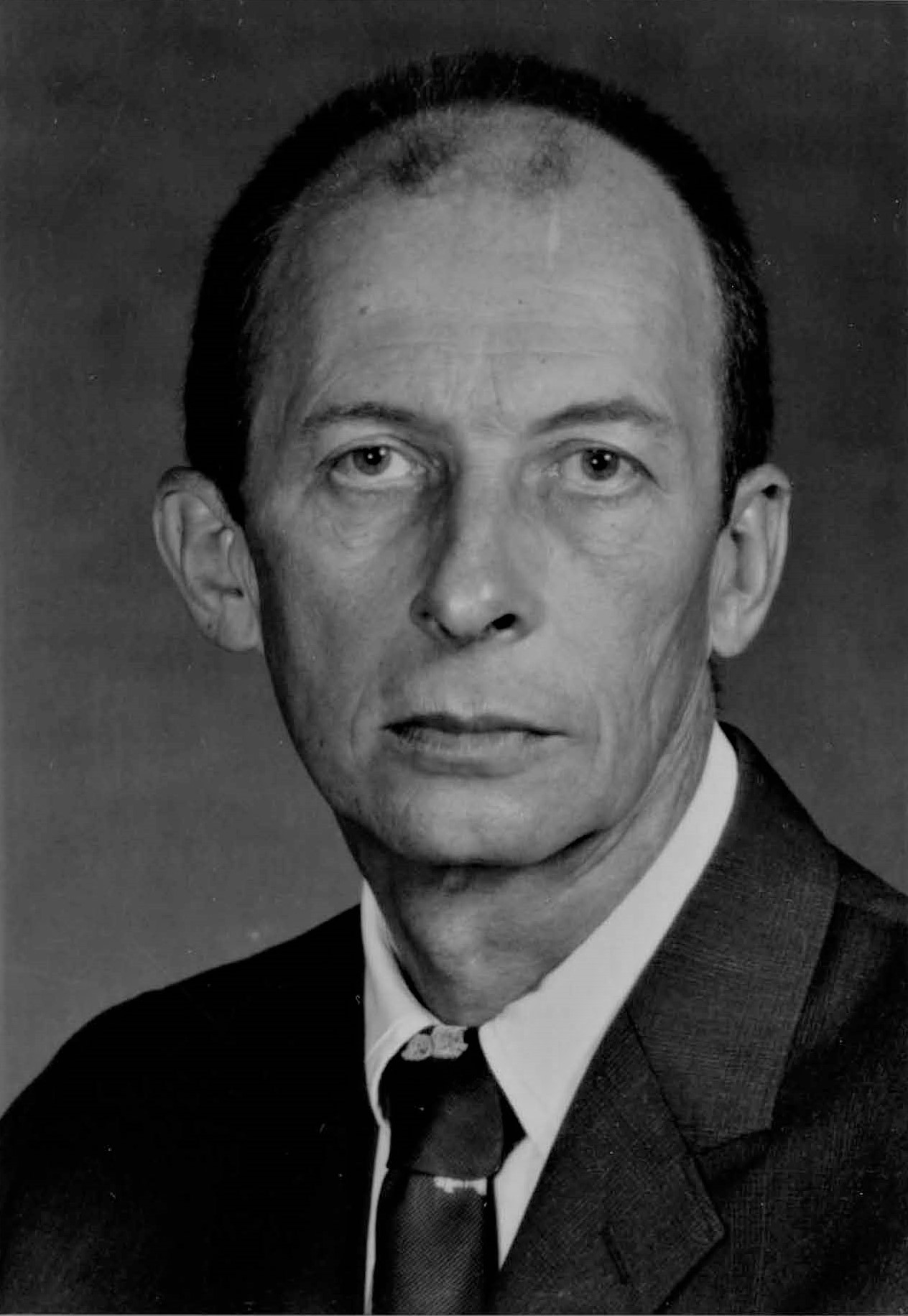
It was with sadness tempered by relief that I learned of the final passing of Dick Simpson. I was privileged to have lunch with Ida Harper Simpson and her son, Bob, at the SSS meetings in Greenville last year. Ida was in great spirits, but disconsolate about Dick. He was gone, long ago. I wish Ida and her family all the best, and if anyone still reads this, you might think of dropping a few bucks in the fund in Dick’s honor. http://sociology.unc.edu/giving/named-funds/the-richard-l-simpson-faculty-support-fund/
Dick Simpson was a hard core work and occupations scholar. His many articles and books focused on work process, occupational trajectories, and the vagaries of occupational life. I most knew him because of his long-time editorship of Social Forces, including a stint from 1983-2003—I published 10 or so articles in Social Forces under Simpson’s direction, and he was always a fair and knowledgeable editor. It wasn’t easy for people working outside of the mainstream areas of stratification and work to get a fair hearing. Back then, it was generally acknowledged that if you did stuff on culture or religion, don’t even bother to send your papers to ASR or AJS. But Dick Simpson, despite being a straight-up work and occs person, would give you a fair hearing and find reviewers who were competent, and ignore reviewers who were overtly hostile religious (or anti-religious) lunatics. Were it not for the editorial diligence and fairness of Dick Simpson, I doubt that I would have made tenure at Vanderbilt, and I certainly wouldn’t have made tenure three years early.
Dick and Ida will always be people I remember as my academic forebears. They have helped me in many ways. Ida helped get me my job at Vanderbilt, and they both introduced me to important figures in the field. It was through Ida and Dick that I met Bill Form and Joan Huber. It probably helped land me an interview at Ohio State (which I bombed), but more importantly I later connected with Bill, who has been an inspiration and role model for my career. Whenever I feel like shit, I can pull out his autobiography….I promised him I’d donate it to a library when he died, and I will, but I’m not done with it.
I hope Dick Simpson’s passing will cause on many to reflect their commitments to building sociology, and not simply their own careers. Dick never promoted himself, or amplified his storied history going back to the era of Rupert Vance. Never. You had to read Ida’s book on the SSS to even get a sense of how those relationships fit. He worked for others, for us all, for the discipline of sociology. I will miss him.
Reducing gun violence, by reducing gun availability and lethality, duh.
18/02/2018
Rather than building a $25 billion wall, let’s use that money to finance a massive gun buy-back program. We’ll help pay for this with a 500% tax on all gun and ammunition sales, and a personal and gun licensing system. Each person owning a gun must pay $100 per year for a license, and must pay an additional tax for each gun they own based on classification, hunting rifles and shotguns up to five shot capacity, $75 per gun, per year, same for rimfire rifles up to 18 shot capacity (no magazines, tube feed). Handguns $500, per year. The taxes should and licensing should be Federal, to ensure that some states fail to enact restrictions.
All guns must be individually insured, and that insurance must cover not only threat, but risk of the weapon being used for violence, which owners, manufacturers, and distributors should be liable for. Federal licensing should include a chip that must be affixed to the gun so it may be tracked. Any violation of gun codes should result in the immediate confiscation and destruction of the weapon.
This is no different from what we do for automobiles, save that we have mostly let states do licensing.
All center-fire guns and rimfire pistols with more than 7 shot capacity clips should be banned and illegal, and must be sold back to the buyback program (which will generously reward people for turning in any gun, and all guns will be destroyed). Buy back should be very generous, and the state should partner with anti-violence social movements to help fund the most generous packages possible. At a minimum, federal buyback for your standard .223 assault rifle (which I can buy brand new at Wal Mart or Academy Sport right now for $625) should be $2000. Two and a half times standard value would be a good mark. Any weapon not licensed and chipped is fair game for buyback, no questions asked. All hanguns with barrels shorter than 6 inches are also banned, and subject to buyback provisions. So, every minor drug addict has an incentive to turn in his Saturday night special and make some money on it.
All sales and transfer of firearms must be coordinated with the BATF, providing proper background checks and ensuring proper licensing. “Gun shows” and other such extralegal markets should be prohibited.
Anyone charged with any violent crime or threat will have all of her weapons and ammunition confiscated. Upon conviction, all weapons and ammunition are to be destroyed…..
Pretty much what they did in Australia, tailored to our current situation….
Why I hate the Dutch….
12/01/2018
The secularization of Europe and the “exceptionalism” of the United States is dogma in the sociology of religion. Never do scholars consider how the two are intimately entwined. The secularization of Europe was all about breaking the final throws of feudalism, and the alliances between church and state. It was about the enlightenment, modernization, and having an educated citizenry. A complete upheaval from a time when religious nutjobs enjoyed power on every level of society. You know, burning people at the stake and shit. Draw and quartering people in the middle of churches. Religion, what is it good for? The secular states forged in Europe sought to eliminate religious control over several areas of life, particularly education, marriage, and individual versus familial or communal control of assets. Religious nutjobs went berserk.
That is where dirty immigrants raise their ugly heads. Facing the imposing development of a secular state, religious nutjobs throughout Europe decided that they would instead immigrate to the land of the free, at least in terms of being able to teach your children bullshit and not having it challenged by state institutions. Europe is secular because they sent all of their religious nutjobs to the United States. Give us your tired, your poor, your religious nutjobs yearning for the afterlife….
This is not simply a rant. It is pretty well established in research, much of it my own. Immigrants to the US are mostly Christians. They are disproportionately Christian compared to their nation of origin. And, they are much more religious than people from their nation of origin. Our Ambassador to the Netherlands, Peter Hoekstra, is exhibit A. Betsy De Vos and her family are another great example, as are Mark Regnerus and the endless stream of Dutch conservatism emanating from Calvin, Gordon, Wheaton, and Houghton. They left Europe in hope of creating a theocracy, and they are hell bent on doing it.
I really think we need to discuss this with our ambassadors from the Netherlands. They need to take responsibility for their own. The Dutch must be deported back to their shithole country. Thankfully for them, they will have food and shelter, healthcare coverage, and free education.
Interstellar Overdrive, for the holy night.
20/12/2017
Because, Paco….and Zappadan
19/12/2017
And Isfahan…my father grew up there…and Tom Lippincott is an old friend….
Revenge….
18/12/2017
 Iranianredneck's Weblog